March 2026: The BakerAvenue Prudence Indicator
The BakerAvenue Prudence Indicator Says…
A Crude Awakening: Resilient Growth Remains Our Base Case, but Tail Risks Increase
"Things work out best for those who make the best out of how things work out."
- John Wooden
The Iran conflict has led to an oil price shock, joining concerns over AI disruption and private credit to further rattle already fragile investor sentiment. In return distributions, tail risks are unlikely but possible events that need to be monitored. The fatter the tail, the higher probability that something alters a base case. A ~30% move in oil prices in such a short time certainly qualifies. Encouragingly, past geopolitical shocks (particularly those surrounding oil spikes), while disruptive for markets in the near term, mostly offered good medium-term buying opportunities. We are judging this one by analyzing the breadth (e.g., global involvement or regional), duration, and factor depth (e.g., secondary impacts on interest rates, consumer spending, etc.). While the dynamic macro environment should keep volatility elevated, growth resiliency has proven to be sustainable, and our base case assumes this conflict won’t change that view. We remain constructive.
The first part of the year has started with the rotational impulse accelerating. The percentage of stocks contributing to (positive) performance has increased, helping to broaden the opportunity set and prolong the market’s advance. Last year’s top performing stocks have struggled to sustain their momentum, while many of the neglected corners of the market (e.g., small caps, value, etc.) have perked up. We see the developments as more of a rotation (or rebalancing) away from the U.S. technology story rather than a broader risk aversion story. A rotational, non-distributive market is natural and historically helps to improve the health of market advances.
Markets were slightly lower in February and remain near all-time highs. Continued earnings strength and resilient economic data served as catalysts while macro volatility has kept more than a few skeptics entrenched. The year has started with no shortage of debate. More than a few investors have overlooked the tailwinds of sustainable growth, enduring industry themes, and repositioning that have propelled markets toward all-time highs over the past several months. While investors face a complex mix of inputs with solid growth tested by lingering uncertainty and elevated valuations, broader participation is increasing their optionality.
As this year’s headlines already confirm, the geopolitical volatility will remain elevated. The associated volatility raises the odds of a consolidation, but we would expect investors to use potential dips as buying opportunities as the tailwinds remain underappreciated. Our baseline forecast is that the economy operates at a moderate pace, fiscal policy turns more expansionary, and interest rates normalize. We assume geopolitical risks normalize (ease), but acknowledge the risks associated with that view. Regardless, the backdrop should be supportive of another year of corporate profit growth.
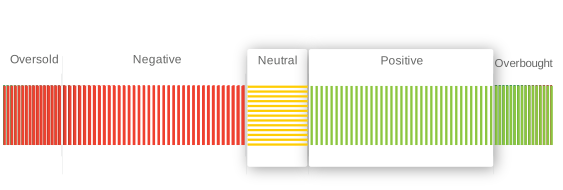
In times like these, it is important to have an investment process in place that removes emotion from the equation. At BakerAvenue, we maintain analytical independence from pre-written market narratives. We remove preconceived biases and defer to our analytical output. Ultimately, our views are only as optimistic or pessimistic as our technical, macro, and fundamental analyses indicate. Currently, our short-term metrics are in a neutral position while our longer-term view is positive.
For those who have been following our market updates (view previous market update videos and commentaries), you will be familiar with several of our key concerns and opportunities. We have continually stated our expectations of moderate growth. There are plenty of adjustments to consider, but our overarching views remain the same. Ultimately, economic and earnings growth will support a grind higher in equities. We believe it is a good time to be active and want to be thoughtful regarding portfolio construction and risk control.
The Technical Perspective
From a long-term perspective, price trends remain positive as we start a new year. Support lines remain upward sloping and leadership has been supportive with pro-growth sectors still outpacing the more defensive groups. Equally weighted and small cap indices have started to pick up relative strength and have helped to broaden the (still) overly concentrated market. We continue to see an opportunity for tactical repositioning as leadership shifts; we are intently focused here as we consider portfolio tilts.
We are looking for a sustained momentum thrust (e.g., expanding advance/decline lines, an expansion in new highs vs. lows, etc.) and easing volatility to help revisit the highs of the year. We suspect it will take time as the recent bout of geopolitical volatility makes it tough. Fortunately, internals are in pretty good shape with ~55% of the S&P 500 trading above their respective 200-day moving average. A strong technical foundation raises the odds that corrective weakness, should it continue, is more likely to be contained. As active managers, we are encouraged by the higher performance dispersion within sectors and industries, as it supports more tactical oversight. We expect the lower correlation backdrop will continue this year, an environment we welcome.
Encouragingly, investor sentiment is still supportive (e.g., bull-bear surveys reflect a cautious bias). Bull markets tend to die on euphoria, not skepticism, so we continue to like this input. We have been noting that positioning (e.g., investors have poured well over $7.8 trillion into money market funds) should act as a buffer to sizeable pullbacks. While not the overriding factor, investor positioning often influences the order of magnitude in market moves (higher or lower). While there is certainly a high bar for allocations given elevated risk-free rates, our view is that investors have room to increase equity exposure.
The Macro Perspective
The Iran conflict has added to the crowded macro headlines. Even prior to the conflict, the uncertainty surrounding shifting policies (e.g., trade, tax, monetary, etc.) had raised market volatility. Fortunately, a global fiscal spending cycle and decent economic growth are serving as powerful offsets. Current GDP growth estimates for ’26 are hovering around 2%; we see upside to those forecasts. We believe peak tariff uncertainty is behind us, which should create more visibility for corporate investment decision-making just as the benefits from the OBBB accrue and serve as a tailwind for growth.
Interest rates will continue to carry outsized significance. We believe ultra-low interest rates are a thing of the past and investors should embrace more normalized levels. We expect lower, but not low, interest rates going forward with a milder cutting cycle in which the Fed recalibrates the policy rate. With decent growth, the Fed doesn’t need to be aggressive with the size and number of rate cuts. The Fed is trying to find a neutral rate, which in their eyes is neither accommodative nor restrictive, and we suspect they find it over the next few meetings. We see a couple more rate cuts this year before a pause. Normalized rate policy is a key factor in our preference for active investment management.
The start of the year has already proven that geopolitical events will represent increasingly material considerations for investors. Policy announcements are moving at a fast pace; to start the year, we have had major energy, housing/mortgage, defense, etc. announcements with potentially material sectoral implications. Encouragingly, most are stimulative. While particularly difficult to position for, we have several market- and non-market-based factors to lean on that help assess materiality and support positioning. We are aware of the uncertainty associated with the administration’s approach, but see counterbalances (e.g., tariff uncertainty vs. deregulatory tailwinds and lower taxes) ultimately offsetting much of the impact.
The Fundamental Perspective
Fundamentally, we continue to focus on the trend in corporate profits and credit metrics. Headwinds, such as higher financing and input cost pressure, have been more than offset by acceptable demand trends. Estimates for revenues and profits have been revised higher over the past few quarters and were a stalwart defense against any bearish forecast. The most recent earnings season was strong, highlighted by the fifth straight quarter of double-digit year-over-year profit growth.
Valuations are now only slightly above their long-term averages. However, valuation dispersion within sectors and industries remains elevated with a historically sizable gap between the highest- and lowest-priced assets. We see opportunities in both groups (continued leadership in one, reversion to the mean in the other). Several of the secular growers are commanding high multiples, but also market-leading profitability. Value-oriented pockets offer opportunity, but investors will need to be selective. This is a key factor in our preference for staying active. We continue to advocate for themes like infrastructure and power demand, accelerating capital market activity, and AI-related efficiency gains.
The credit backdrop will be important to monitor as a check on fundamentals and a proxy for risk tolerance. The private credit concerns have yet to impact the public markets materially and credit spreads remain tight. Both investment-grade and high-yield spreads vs. Treasuries remain well below recessionary levels, and support our strong fundamental, and moderate economic growth, views. Corporate cash flows remain healthy, and balance sheets are in good shape.
Concluding Thoughts
The market’s resilience amid the complex web of considerations has been impressive. Another test awaits as the Iran conflict has led to an oil price shock, joining concerns over AI disruption and private credit to further rattle fragile investor sentiment. We are focused on the breadth, duration, and depth of the factors impacted and will adjust views as the situation unfolds. Fortunately, while the dynamic macro environment is keeping volatility elevated, growth resiliency has proven to be sustainable and is keeping us constructive.
Our investment philosophy is based on a dual mandate of growing and protecting client assets. We continue to focus on “how” one is positioned, not “if” they should have exposure at all. We are staying active, using volatility to harvest losses while opportunistically deploying capital where appropriate. At this point, our cash weightings remain residual in nature, and we are focusing on strategy positioning vs. our respective benchmarks to control risk. Of course, should the backdrop continue to destabilize, we will take a more defensive stance.
Should you have any questions or comments, please contact BakerAvenue. We are happy to share our thoughts in greater detail, and we welcome the opportunity to speak with you.
About the author

Baker Avenue Asset Management is an investment adviser registered with the U.S. Securities and Exchange Commission. SEC registration does not constitute an endorsement of the firm by the Commission, nor does it indicate that the adviser has attained a particular level of skill or ability. Information presented is for educational purposes only and does not intend to make an offer or solicitation for the sale or purchase of any specific securities, investments, or investment strategies. Any opinions expressed reflect BakerAvenue's views as of the date of the recording and are subject to change without notice. References to specific securities should not be construed as personalized investment advice and do not represent all securities purchased, sold, or recommended for client accounts. It should not be assumed that any investment discussed was or will be profitable. BakerAvenue, its employees, and/or its clients may hold positions in the securities discussed. Investments involve risk and, unless otherwise stated, are not guaranteed. Be sure to first consult with a qualified financial adviser and/or tax professional before implementing any strategy discussed herein. Past performance is not indicative of future performance.